TopFiveFind may earn from qualifying purchases. Rankings are editorial starting points, not hands-on test claims.
Home/Vacuum Sealers/Canon EOS Rebel T7 DSLR Camera Double Zoom Lens Kit | EF-S 18-55mm & EF 75-300mm Lenses, 24.1 Megapixel CMOS
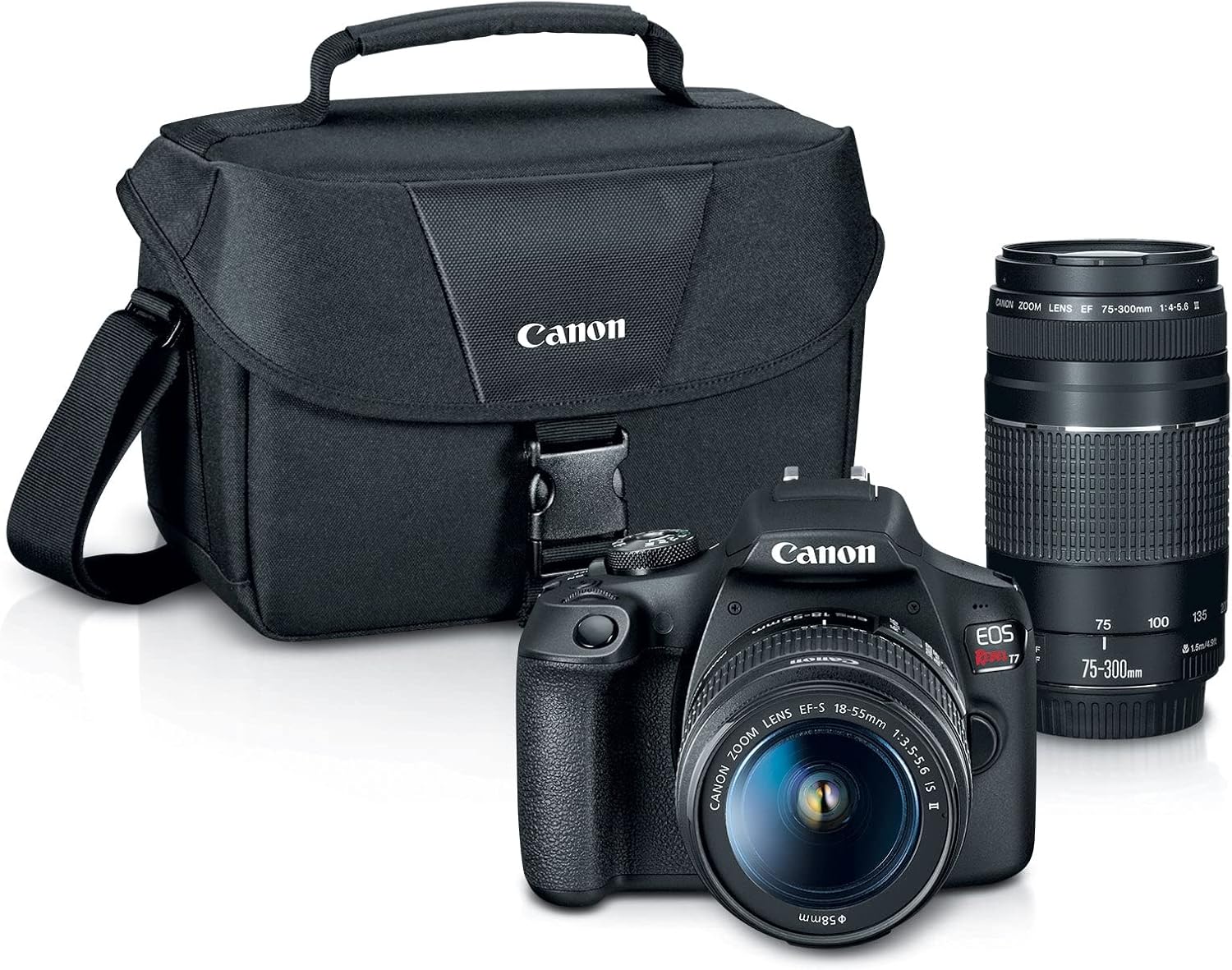
Canon EOS Rebel T7 DSLR Camera Double Zoom Lens Kit | EF-S 18-55mm & EF 75-300mm Lenses, 24.1 Megapixel CMOSProduct image from current catalog data
Best Budget Kit

Canon EOS Rebel T7 DSLR Camera Double Zoom Lens Kit | EF-S 18-55mm & EF 75-300mm Lenses, 24.1 Megapixel CMOS

By Canon

9.1Excellent matchFeature and use-case score

Both lenses are genuine Canon, which several bundles cannot claim, and the second one is the weakest telephoto Canon still sells.

  • Both lenses genuine Canon: EF-S 18-55mm standard zoom and EF 75-300mm telephoto
  • 24.1-megapixel APS-C sensor with built-in Wi-Fi and NFC, and a 9-point AF system with AI Servo
  • EOS Utility Webcam Beta software support, turning the camera into a webcam
See Price at the store →Price, delivery, and configuration can change at the retailer.
ByTopFiveFind Research Desk

How this was made: AI-assisted research and drafting organize the evidence. Exact product identity, source claims, owner-feedback patterns, conflicts, and publication checks are documented before indexing. No hands-on or human-expert testing is claimed unless a page explicitly shows that evidence. Read the full methodology.

Best fitBest Budget Kit
CategoryVacuum Sealers
BrandCanon
Catalog score9.1 / 10

Product overview

Canon EOS Rebel T7 Double Zoom Lens Kit: What to Know

Credit first: both lenses in this kit are real Canon optics, the EF-S 18-55mm and the EF 75-300mm, not third-party substitutes or manual curiosities. That already puts it ahead of some bundles on this page. The 18-55mm is a competent standard zoom and the camera is a straightforward 24.1 megapixel APS-C DSLR with built-in Wi-Fi and NFC.

But the EF 75-300mm needs naming for what it is, and we have examined it in detail elsewhere. It has no image stabilisation, which at 300mm is where you need it most. Its focus is a front group rotating extension system driven by a micromotor, so autofocus is slow and audible and the front of the lens turns while focusing, which rotates any polarising filter out of alignment. Its closest focusing distance is 1.5 metres. It is a lens from a much earlier era, and in a double-zoom kit it is there to make the box say two lenses.

The camera's other limits are generational rather than faulty. A 9-point autofocus system with AI Servo, an optical viewfinder with approximately 95 percent coverage, and ISO 100 to 6400 expandable to 12800. Canon notes improved Dual Pixel CMOS AF and eye detection in live view, and a useful detail: the EOS Utility Webcam Beta software turns the camera into a webcam, which is a real feature for anyone on video calls.

The strategic caveat is the mount. EF-S is a DSLR system Canon has stopped developing in favour of RF, so lenses bought for this kit do not transfer to a future mirrorless body. For someone who wants an inexpensive camera for daylight stills and will not buy more lenses, that is irrelevant. For someone building a system, the R100 kit above is the better start.

Key Listed Features

01

Both lenses genuine Canon: EF-S 18-55mm standard zoom and EF 75-300mm telephoto

02

24.1-megapixel APS-C sensor with built-in Wi-Fi and NFC, and a 9-point AF system with AI Servo

03

EOS Utility Webcam Beta software support, turning the camera into a webcam

04

EF 75-300mm has no stabilisation, a micromotor and a rotating front element, and EF-S is a discontinued mount direction

Buying questions

Quick Answers

Is the second lens worth anything?

It is a real Canon lens that reaches 300mm, which is not nothing, and on an APS-C body that frames like 480mm. In bright sunlight on a static subject it takes usable photographs. What it will not do is deliver a high proportion of sharp frames, because without stabilisation at 300mm and f/5.6 you need a shutter speed most conditions will not give you. Treat it as a bonus rather than as the telephoto you were buying, and expect to replace it if telephoto work becomes a priority.

Why does 95 percent viewfinder coverage matter?

Because what you see is not quite what you get. At 95 percent coverage the final image includes a thin band around the edges that was not visible in the viewfinder, so objects can appear at the frame edge that you did not intend to include. For casual photography it is irrelevant; for careful composition it means checking the edges on the screen afterwards. Electronic viewfinders on the mirrorless cameras in this guide show 100 percent by nature, since they display the actual sensor feed.