Buyer checklist
How We Compared These Board Games That Look Like Books: One Product Line, Five Different Games Inside
Because these are five variants of one product, comparing them on packaging or price would be meaningless: the case, the slipcover, the dimensions and the price are common across the line. So we compared the three things that are not common. First, the game inside and whether it is one you would actually play, since a beautiful box containing a game nobody enjoys is an ornament. Second, the components, which differ substantially and are where the premium goes: die-cast pewter in one, solid wood in another, printed cards in a third. Third, and most practically, the player count and minimum age, which vary from 2 to 6 players and from ages 3 to 8 across the line. All figures are WS Game Company's own, read off the live Amazon.com listings. We have not handled any of these, and the heirloom-quality and premium descriptions below are the manufacturer's words rather than our assessment.
Board Games That Look Like Books: One Product Line, Five Different Games Inside Buying Questions
Are these just normal games in a fancy box?
No, and the component lists are where the difference shows. These are not standard retail editions reboxed: Monopoly here has die-cast pewter tokens and wooden houses rather than the plastic of a current retail set, Scrabble has 100 solid wood tiles and wooden racks rather than plastic, and Clue has wood movers with die-cast bases and die-cast weapons. The artwork is also drawn from specific vintage editions, 1935 for Monopoly, 1949 for Clue, 1979 for Chutes and Ladders. So you are buying upgraded components and period graphics inside a display case, which is a genuine product rather than packaging alone.
Which should I buy if it is a gift?
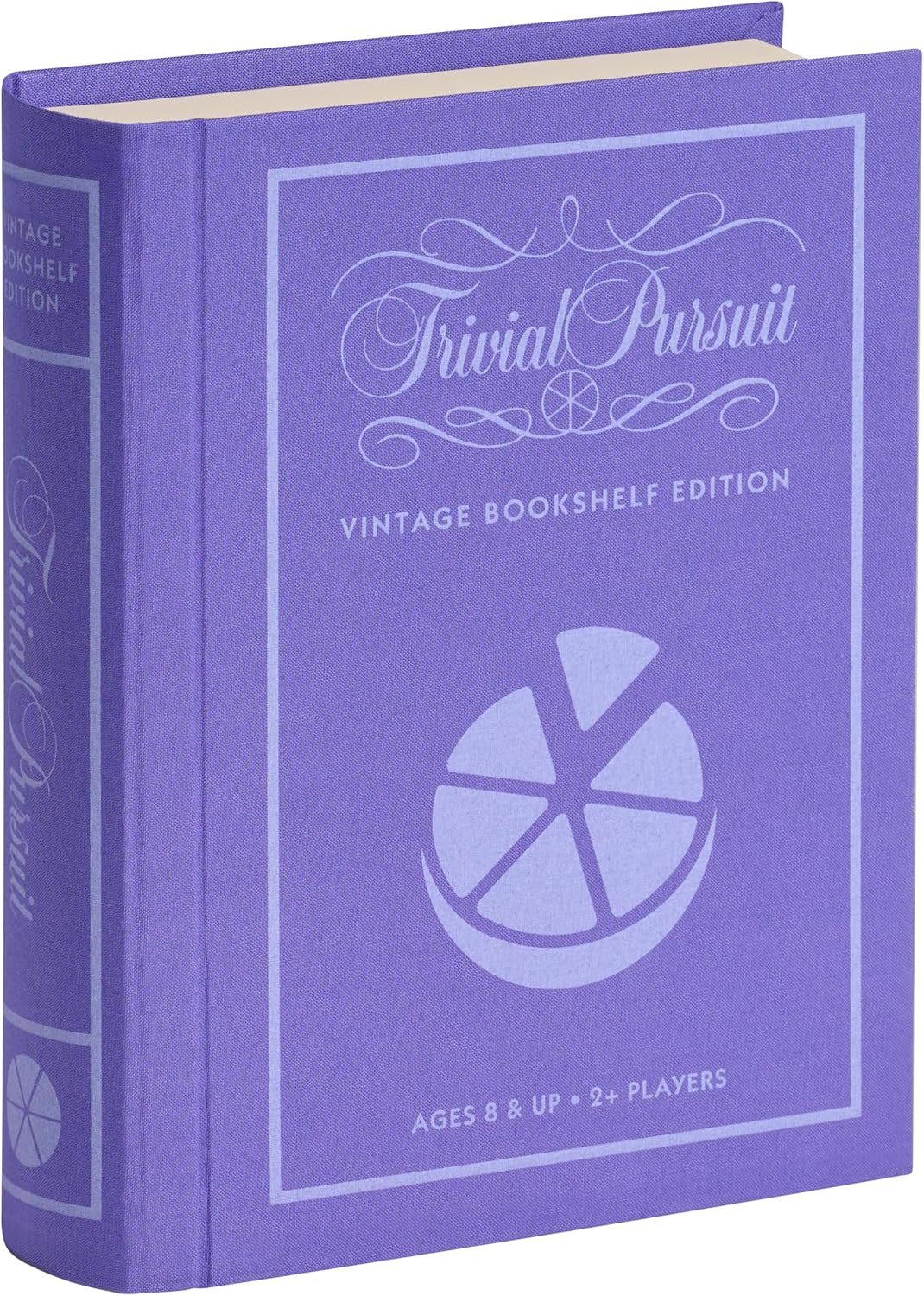
Monopoly or Scrabble, on component value. The die-cast pewter tokens and wooden houses in the Monopoly edition and the 100 solid wood tiles in the Scrabble edition are the most visibly upgraded contents in the line, which is what a recipient notices when they open it. Clue is the better choice for someone who actually plays games rather than displaying them, since murder-mystery deduction holds up better than Monopoly does. Avoid Trivial Pursuit as a gift unless you know the recipient likes trivia, because 1,200 questions in one box dates and exhausts faster than a mechanical game.
Do they actually look like books on a shelf?
That is the design intent and the case is built for it: a fabric-wrapped hardcover-style case with a protective slipcover, 10.6 by 8.4 by 2.6 inches, meant to stand upright on a shelf. At 2.6 inches thick each one is about the depth of a substantial hardback, so a few side by side read as a set of matching volumes rather than as games. The practical caveat is the same as for real books: 2.6 inches each means five of them take over a foot of shelf, and the slipcover is cardboard, so it will scuff with handling.