TopFiveFind may earn from qualifying purchases. Rankings are editorial starting points, not hands-on test claims.
Home/Vacuum Sealers/Canon RF50mm F1.8 STM Lens | Mirrorless Fixed Focal Length Lens, Compact, Lightweight Design, Portraits, Low Light
Canon RF50mm F1.8 STM Lens | Mirrorless Fixed Focal Length Lens, Compact, Lightweight Design, Portraits, Low LightProduct image from current catalog data
Best Overall

Canon RF50mm F1.8 STM Lens | Mirrorless Fixed Focal Length Lens, Compact, Lightweight Design, Portraits, Low Light

By Canon

9.8Excellent matchFeature and use-case score

A fixed 50mm at f/1.8 with a control ring and a 43mm filter thread, and the lens that will most change what your camera can do indoors.

  • Fixed 50mm focal length at a maximum aperture of f/1.8 for low light and background separation
  • Gear-type stepping motor (STM) for smooth, quiet continuous autofocus in video and stills
  • Assignable control ring, normally a higher-end RF feature
See Price at the store →Price, delivery, and configuration can change at the retailer.
ByTopFiveFind Research Desk

How this was made: AI-assisted research and drafting organize the evidence. Exact product identity, source claims, owner-feedback patterns, conflicts, and publication checks are documented before indexing. No hands-on or human-expert testing is claimed unless a page explicitly shows that evidence. Read the full methodology.

Best fitBest Overall
CategoryVacuum Sealers
BrandCanon
Catalog score9.8 / 10

Product overview

Canon RF 50mm F1.8 STM: What to Know

The aperture is the whole argument. Every kit zoom Canon sells in the RF range opens to f/4 at best and f/7.1 at the long end, and that is the difference between a usable indoor photograph and a noisy one. At f/1.8 this lens gathers several times more light than a kit zoom at the same focal length, which means lower ISO, faster shutter speeds and the shallow depth of field that separates a face from a background. For a camera owner who finds their photographs flat, this is the cheapest fix available.

Two features make it more than a budget prime. The stepping motor, gear-type STM in Canon's terminology, gives smooth and quiet continuous autofocus during video as well as stills, so it is not the buzzing focus of older cheap primes. And there is a control ring, which on RF bodies is assignable to aperture, ISO or exposure compensation and is normally reserved for more expensive lenses. Canon also specifies optimised lens placement and coatings to minimise ghosting and flare.

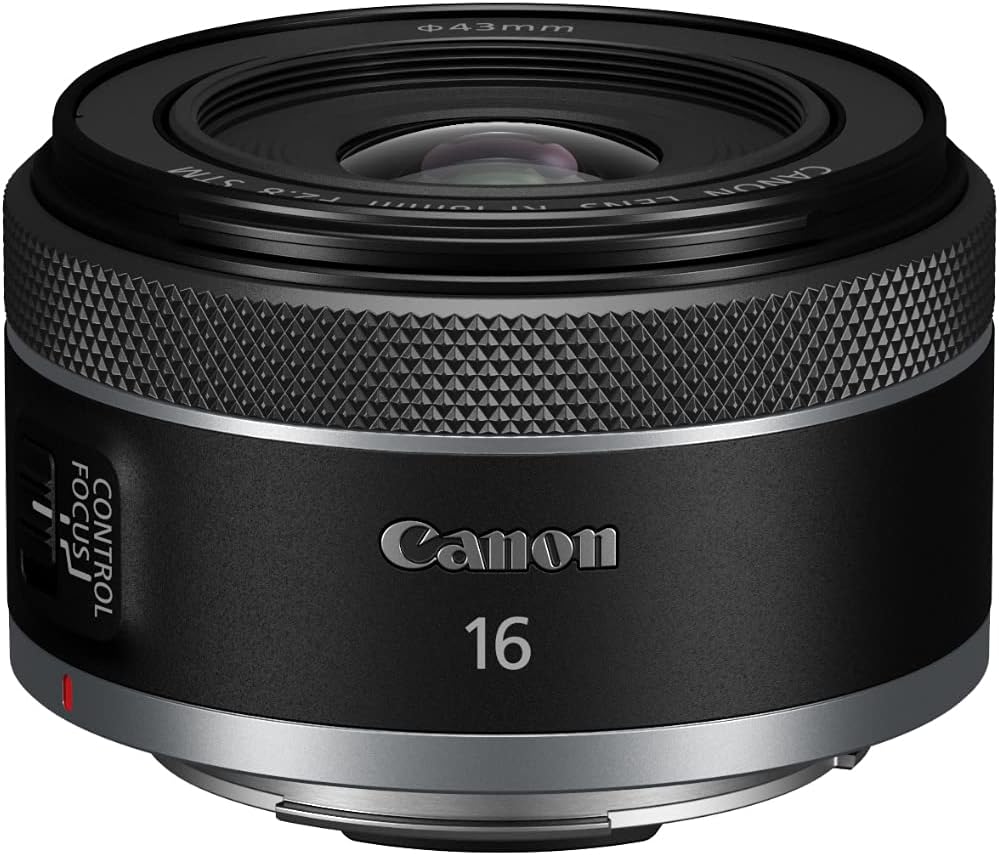
The filter thread is 43mm, which matters more than it looks: the RF 16mm F2.8 in this guide shares the same 43mm thread, so one filter set covers both primes. That is a genuine saving and a reason to pair those two specifically.

What you give up is zoom. A 50mm prime on a full-frame body is a normal field of view and you reframe by moving, which is a discipline rather than a flaw. On an APS-C body such as an R10 or R50 it behaves closer to an 80mm, which is flattering for portraits and tight for anything else. Canon rates no optical image stabilisation on this lens, so the body's IBIS, if it has any, is doing that work.

Key Listed Features

01

Fixed 50mm focal length at a maximum aperture of f/1.8 for low light and background separation

02

Gear-type stepping motor (STM) for smooth, quiet continuous autofocus in video and stills

03

Assignable control ring, normally a higher-end RF feature

04

43mm filter thread, shared with the RF 16mm F2.8, with coatings to minimise ghosting and flare

Buying questions

Quick Answers

Is a 50mm prime limiting?

It is constraining rather than limiting, and most photographers find the constraint productive. You cannot zoom, so you move, and moving changes perspective in a way zooming does not. The practical limits are real: it is too tight for interiors and group shots on a full-frame body and much too tight on APS-C, which is why most people own this alongside a zoom rather than instead of one. As a second lens that transforms low-light and portrait work, it is the standard recommendation for good reason.

What does the control ring do?

It is a third ring on the barrel, beyond focus, that you assign in the camera menu to aperture, ISO, shutter speed or exposure compensation. In practice it means changing aperture with your left hand while your right stays on the grip and shutter, which is the sort of thing that only matters once you have shot with it. Finding one on Canon's cheapest RF prime is unusual, since it is normally a feature of the L-series range.