Buyer checklist
How We Compared These Decorative Lighting for an Event: Four Picks, and Why Runtime Beats Brightness
This is a category where the listing specification tables are unusually unreliable, so we read all four directly off the live Amazon.com pages and then checked the figures against each other rather than transcribing them. That turned up three errors we are reporting rather than repeating: a fairy light set described as cool white while its own table gives 2800 Kelvin, which is warm; a pair of small arc lighters listed at an item weight of 3.5 pounds; and a set of flameless tealights whose table claims an E26 bulb base and a G25 bulb shape, neither of which a battery tealight has. Treat that as a warning about the category generally. The figures we did rely on are the ones that are internally consistent and specific: battery chemistry and count, stated runtime, string length, LED count per string, bulb base and shape, wattage and colour temperature. Only one of these four brands, C-LIGHT, publishes anything resembling a lifespan methodology, and Homemory is the only one with a third-party certification we could name. Nothing here was lit, timed or run down by us, and every runtime figure is the manufacturer's own.
Decorative Lighting for an Event: Four Picks, and Why Runtime Beats Brightness Buying Questions
What runtime should I expect from battery decorative lighting?
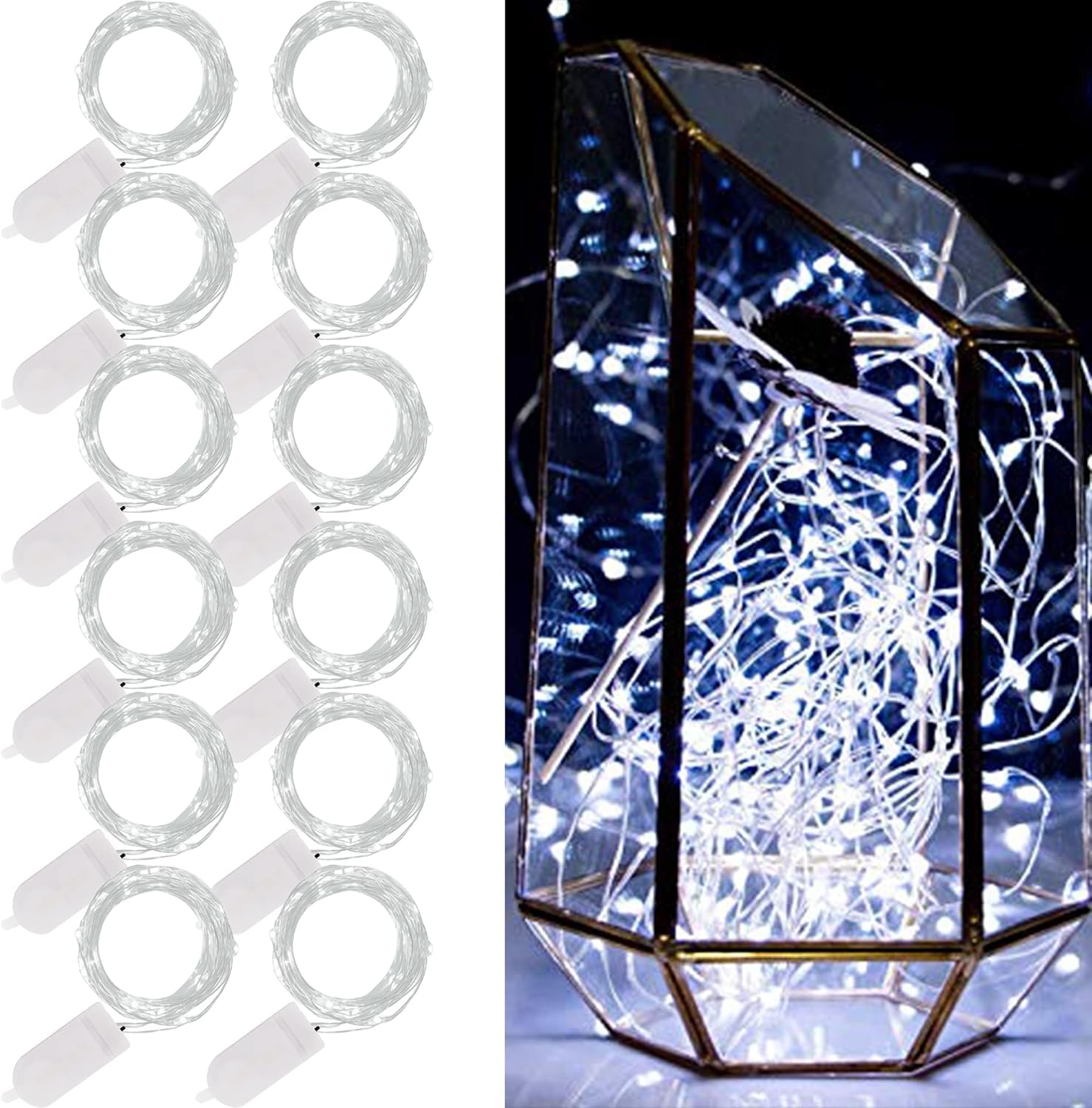
Ask what cell it uses, because that decides everything. A CR2032 coin cell, as in the Homemory tealights, holds enough energy for the 200-plus hours those claim because a single flickering LED draws very little. The smaller button cells in fairy light strings run 20 LEDs instead of one, so they last a fraction of that, which is why the WATERGLIDE set ships with spare-friendly battery cases and a screwdriver rather than a runtime figure. The practical rule for an event: anything on coin cells is fine for a weekend, anything running a full string on button cells should be switched on as late as you can bear.
Are button and coin cell batteries a safety issue?
Yes, and it is the one genuine hazard in this guide. A swallowed coin cell can cause serious internal injury quickly, which is why child-resistant battery compartments exist on products like these and why the Homemory tealights specifically advertise a two-step lock compartment along with a UL certification. The fairy light strings in this guide come with a screwdriver precisely because their cases are screw-closed rather than snap-shut. If there are small children or pets in the house, treat coin cells as you would medication, and check that any decorative light you buy needs a tool to open.
Can any of these be used outdoors?
Partly, and the wording matters. The C-LIGHT S14 bulbs are described as waterproof and are intended for outdoor patio string runs, which is their main use. The WATERGLIDE strings claim the wire portion can be put in water, which is a claim about the lit wire and not about the battery case, so the case needs to stay dry and sheltered. The KEETDC lighter is described as splashproof, which is weather resistance rather than a rating. And the Homemory tealights carry no ingress rating at all, so they are indoor or under-cover items. None of these four publishes an IP number.