Buyer checklist
How We Compared These Canon EF and EF-S Lenses for DSLRs: Which Fit Your Body, and Which One to Avoid
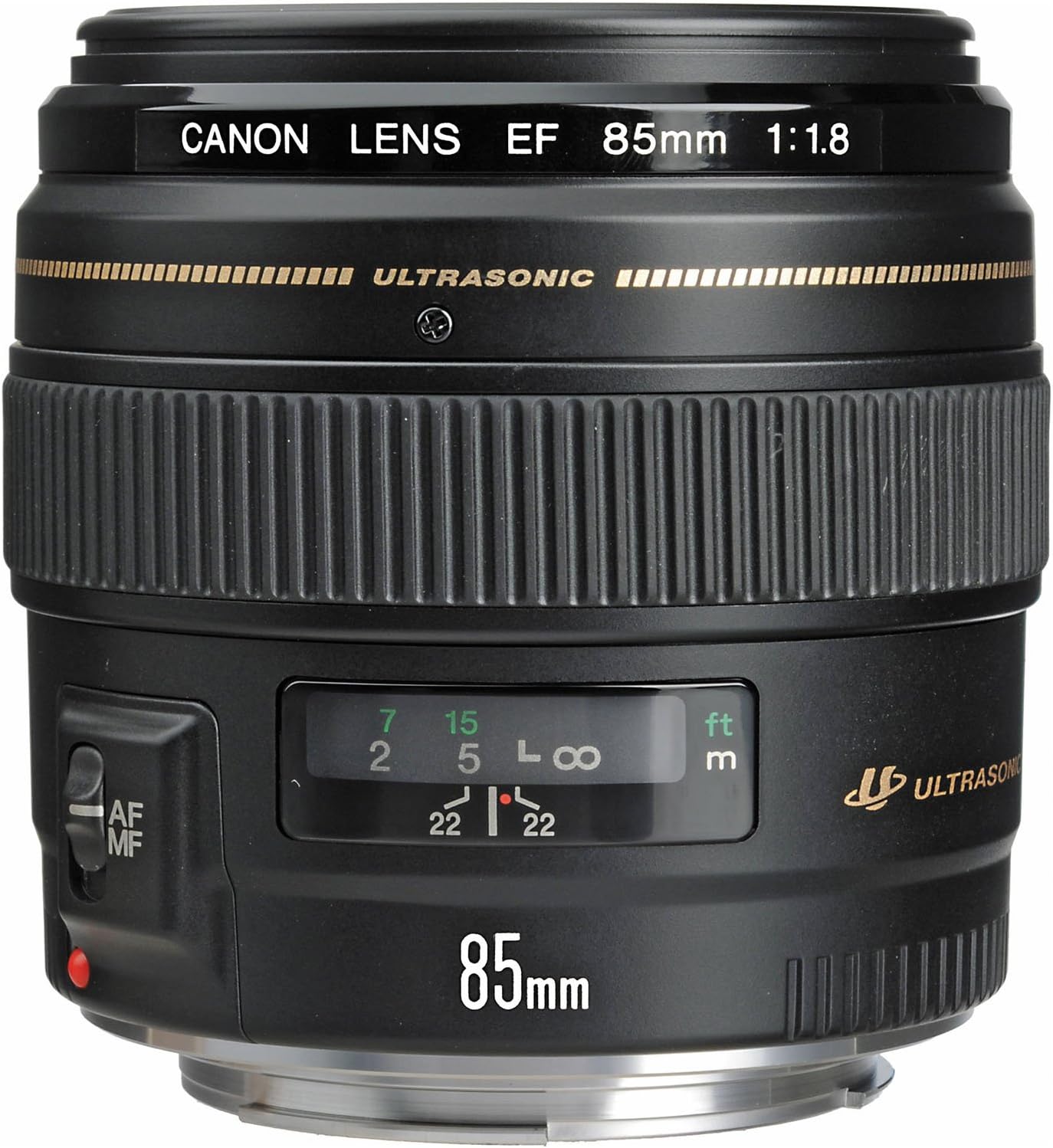
Everything here is a real Canon product with published specifications, so we worked from Canon's own listing copy: focal lengths, maximum apertures, angle of view in degrees, closest focusing distances, maximum magnifications, element and group counts, drive systems and stabilisation ratings. We checked those against the Amazon detail tables and again found the tables unreliable, with a 300mm focal length rendered as 30 centimetres, an 85mm as 8.5 centimetres and a maximum aperture given as 5.6 millimetres, so the tables are ignored throughout. Two listing quirks are worth knowing before you read on. The EF 85mm f/1.8 is described in its own bullets as both a telephoto zoom lens and as not zoomable, which is a cataloguing error rather than a mystery. And several of these lenses are also sold as Renewed units under separate ASINs at lower prices; where that is the case we have used the standard new listing and said so. Nothing here was mounted or tested by us.
Canon EF and EF-S Lenses for DSLRs: Which Fit Your Body, and Which One to Avoid Buying Questions
Will an EF-S lens fit a full-frame Canon DSLR?
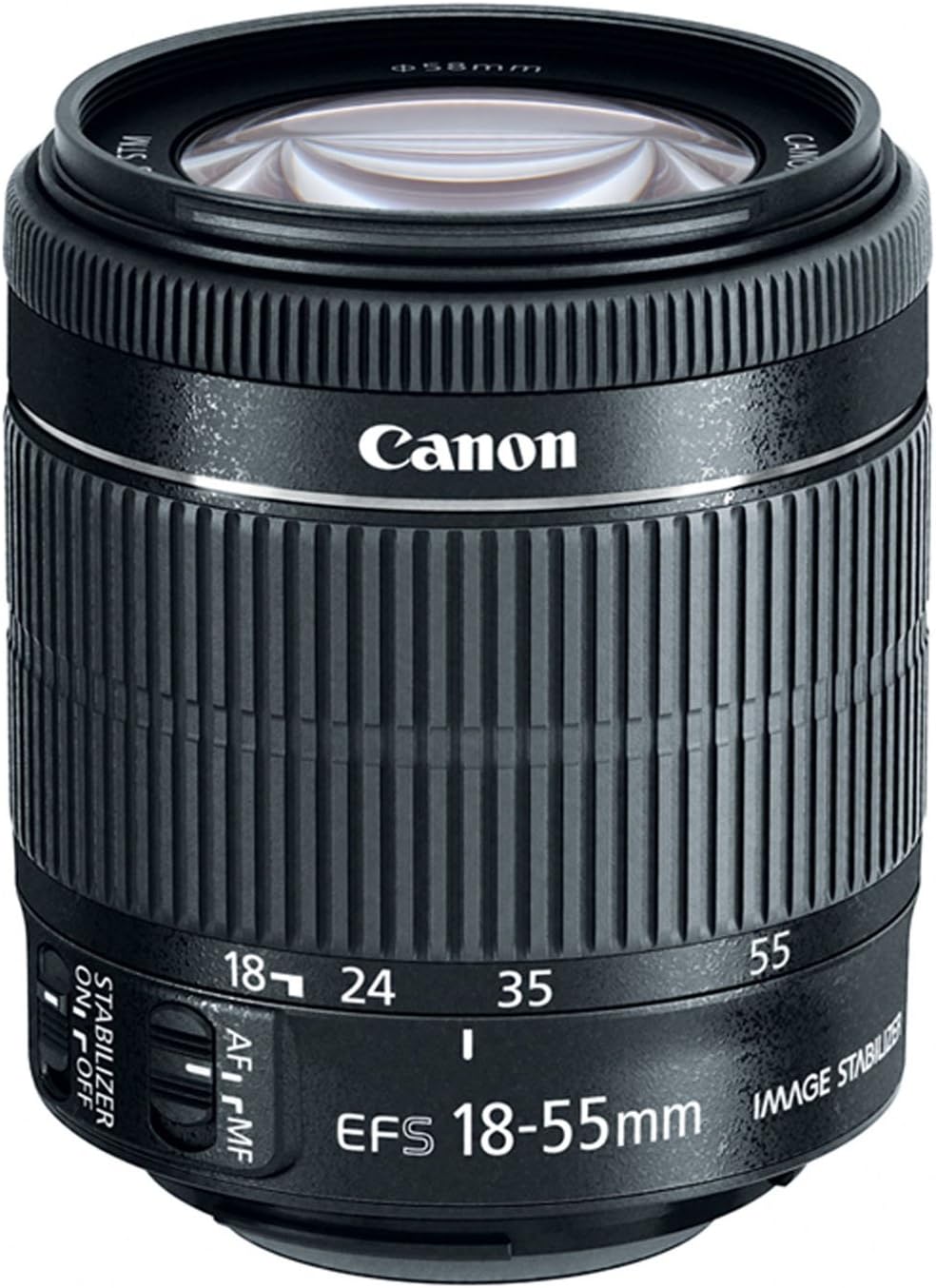
No, and this is where EF-S differs importantly from the mirrorless RF-S system. EF-S lenses have a rear element that protrudes further into the body and a mount with a physical difference, so they cannot be fitted to a full-frame EF body such as a 5D or 6D at all. Attempting it risks the mirror. RF-S lenses, by contrast, mount on any EOS R body and simply crop. So on DSLRs the rule is absolute: EF-S lenses are for APS-C bodies, EF lenses fit everything. Two of the five lenses here are EF-S, the 18-55 and the 10-18.
What does the crop factor do to a focal length?
It narrows the field of view without changing the lens. Canon's APS-C DSLRs have a 1.6x crop factor, so a 50mm lens frames like an 80mm would on full frame, which Canon states directly in the EF 50mm listing. That is why the 50mm prime here is a portrait lens on a Rebel and a normal lens on a 6D, and why 10-18mm is a genuine ultra-wide on a crop body rather than a fisheye. Multiply the marked focal length by 1.6 to get the full-frame equivalent framing. The aperture does not change.
Why avoid the EF 75-300mm III when it is cheap?
Because its own specifications describe a design from a much earlier era, and all three problems are published rather than alleged. It has no image stabilisation, which at 300mm is where you need it most. Its focus is a front group rotating extension system driven by a micromotor, which means autofocus is comparatively slow and audible, and the front of the lens rotates as it focuses, so a polarising filter rotates out of alignment every time. And the closest focusing distance is 1.5 metres. If you need reach on a budget, a stabilised 70-300 with a quieter motor costs more and is worth it; this lens is cheap for reasons you will notice.