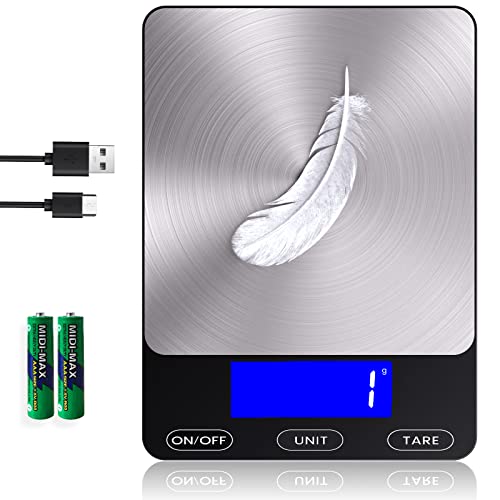
How this was made: AI-assisted research and drafting organize the evidence. Exact product identity, source claims, owner-feedback patterns, conflicts, and publication checks are documented before indexing. No hands-on or human-expert testing is claimed unless a page explicitly shows that evidence. Read the full methodology.
The best scale is not simply the one with the largest number on the box. Match capacity, graduation, platform size, controls, and units to the way you actually cook.
01
Capacity and graduation
A higher maximum capacity helps with large bowls and batch cooking, while smaller graduation steps matter for ingredients that need closer measurement. Check both figures together.
02
Tare control
Tare resets the display after a container is placed on the platform. It is essential for weighing ingredients directly into a bowl and adding them in stages.
03
Units and display
Confirm the units you use most often and look for a display that stays readable when a mixing bowl is on the platform. Touch controls should remain easy to reach.
04
Cleaning and storage
A wipe-clean surface, sensible platform size, auto-off, and a compact profile all make a scale easier to keep in regular kitchen rotation.
Digital Kitchen Scale Questions
Is a higher capacity always better?
No. Higher capacity is useful for heavy bowls or bulk ingredients, but very light ingredients may need a lower minimum starting weight or a dedicated precision scale.
Why does platform size matter?
A larger platform can support wider bowls more securely. Make sure the bowl does not cover the display or controls when positioned for weighing.
What should be checked before buying?
Confirm maximum capacity, graduation, minimum starting weight, supported units, power method, dimensions, and the exact included accessories.
Similar Products You Might Like
Etekcity Food Kitchen Scale, Digital Grams and Ounces, ...