Buyer checklist
How We Compared These Games Like Spot It: Four Fast Games, and the Two Spot Its Are Not Interchangeable
We treated Spot It as the reference point and asked what each alternative changes about it, because every game on this page tests the same underlying skill, fast visual matching under time pressure, and the differences are in what else is layered on top. The two Spot It editions are compared on their published ages and playtimes, which differ meaningfully, and on the fact that both contain five mini-games rather than one. All player counts, ages, playtimes and contents below are the publishers' own figures read off the live Amazon.com listings including the detail tables. Two of these four we have examined in more detail in other guides and they appear here because they are genuine answers to this specific search. We did not play or time any of these, and the observation-skill claims below are the publishers' framing rather than measured outcomes.
Games Like Spot It: Four Fast Games, and the Two Spot Its Are Not Interchangeable Buying Questions
Which Spot It should I buy for a four-year-old?
Spot It Animals, which Asmodee states at ages 4 and up, rather than Spot It Classic at 6 and up. The reason is the symbol set: animal images are recognisable to a pre-reader in a way abstract icons are not, so a four-year-old can match them without having to learn what each symbol is first. The Animals edition also has a longer stated playtime at 15 minutes against the Classic's 10, which reflects younger players taking longer rather than more content. For six and up, Classic has the more varied symbol set and is the better long-term buy.
What are the five games in one?
Both Spot It editions state five built-in variations, which use the same deck with different objectives rather than five separate games. The variations change what you are racing to do, for example claiming cards from a central pile, giving your cards away, or working to a target, and they are printed in the instructions. That matters because the core mechanic, find the single matching symbol between two cards, becomes repetitive quickly, and the variations are what extend a ten minute game into something you return to. Most people play one variation and never read the rest, which is leaving value on the table.
Which of these works for the largest group?
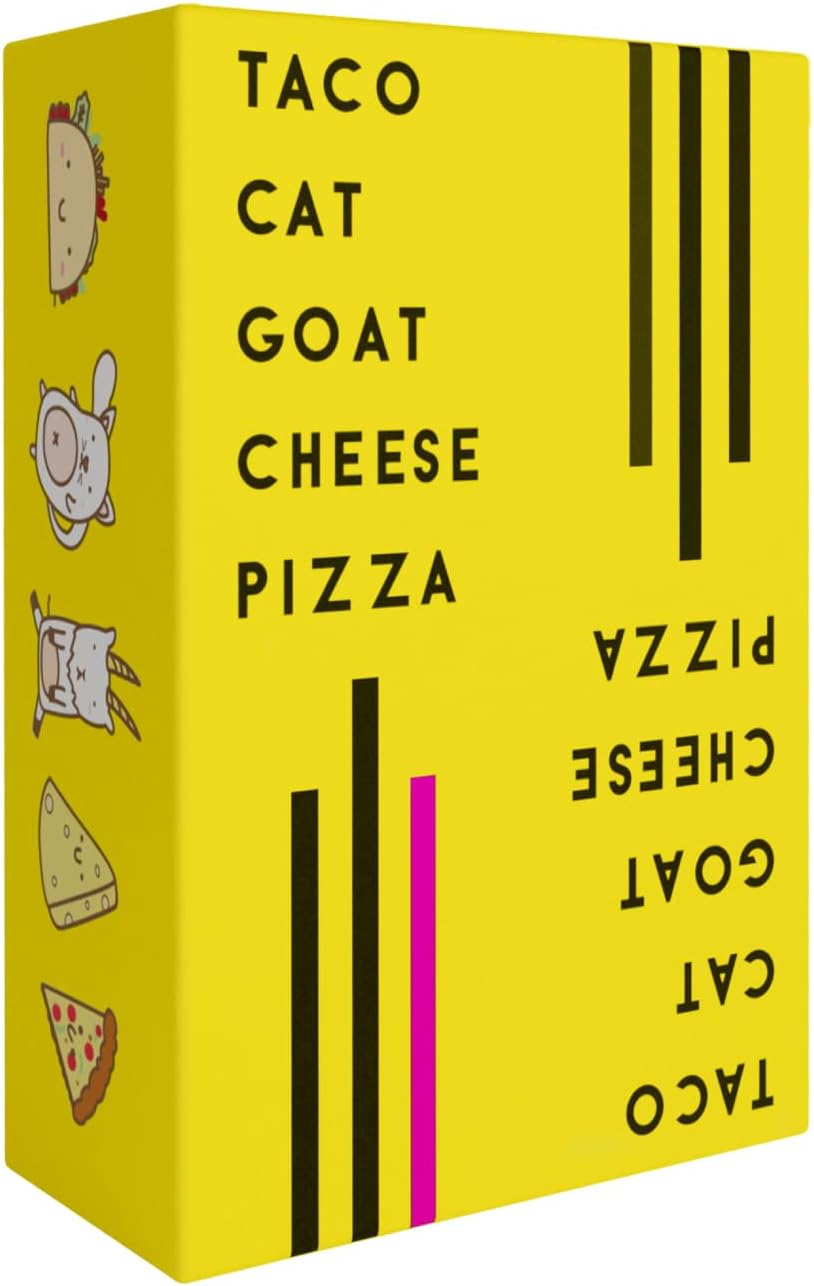
Spot It, either edition, and Taco Cat Goat Cheese Pizza, all stated at 2 to 8 players. Dutch Blitz caps at four and that limit is physical rather than a rule: every player needs their own deck and unobstructed reach to the shared central piles, and with six people around a table two of them are permanently behind someone's arm. For a party or a classroom, the 2-to-8 games are the right choice, and Taco Cat's 10 minute rounds let people join between hands.