Buyer checklist
How We Compared These 5 Power Banks That Keep Your Phone (and Laptop) Alive
This is desk research, not a hands-on test. We did not charge a single phone, drain a single cell or time a single recharge. Everything below comes from archived Amazon listing pages retrieved via the Wayback Machine, plus the feature bullets those pages carried at crawl time. Where a number appears - capacity, wattage, star rating, review count - it is a number that was actually printed on the listing we retrieved, not an estimate we generated.
One substitution needs to be stated plainly. The original draft of this guide named a generic "Mophie Powerstation" with no specific model attached. We first checked the newer mophie Powerstation Core 20,000mAh (ASIN B0CMBKZ5DF), but every Wayback snapshot we could retrieve for that ASIN showed no visible star rating or review count - likely because the listing was too new or too low-volume at crawl time. Rather than cite a rating-less listing next to four rated ones, we substituted the older, more established mophie Powerstation with PD (10,000mAh, ASIN B08GG81RQ3), which does carry a real Amazon rating. That means the mophie entry in this guide is a 10,000mAh unit, not the 20,000mAh Core model the draft originally pointed at. If you specifically want the higher-capacity Core version, you will need to check its current listing yourself.
A second caveat: the Baseus Blade 2 entry rests on a very small review sample - 6 ratings on the snapshot we checked. A 3.9-star average drawn from six ratings is not statistically comparable to a 4.6-star average drawn from 8,447. We have flagged this in the Baseus entry itself rather than presenting all five products as equally well-evidenced. Ratings and review counts also drift over time; the figures here reflect the archived snapshots we retrieved, not today's live numbers.
Finally, a category-wide note: manufacturer feature bullets are marketing copy. When we write "per the listing's own feature bullets," we mean exactly that - we are reporting what the seller claims, not what we independently measured. Capacity figures in particular are cell ratings, not usable output, and real-world charges will vary with the device you plug in.
5 Power Banks That Keep Your Phone (and Laptop) Alive Buying Questions
How much power bank capacity do I actually need?
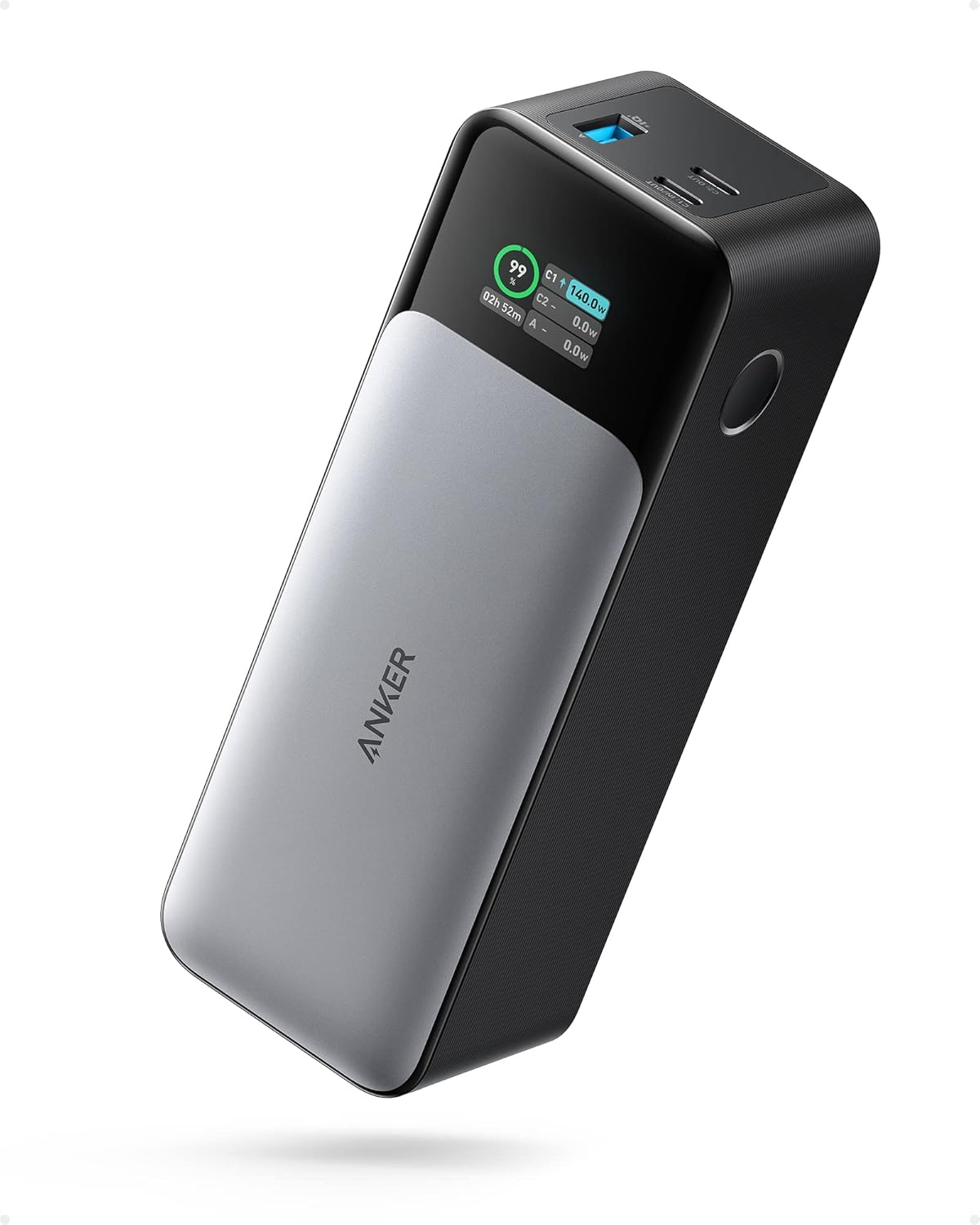
It depends on what you're charging. Per the listings' own feature bullets, a 10,000mAh bank like the INIU or the mophie Powerstation is positioned as roughly two phone charges, while the 24,000mAh Anker 737 is described as juicing an iPhone 13 almost five times or a 2021 iPad Pro 12.9-inch about 1.3 times. Laptops draw far more than phones, so if laptop charging is the goal, look at the higher-wattage units here - the Anker 737 at 140W and the Baseus Blade 2 at 65W.
What's the difference between 18W, 22.5W, 65W and 140W output?
Wattage is the ceiling on how fast a device can charge. The mophie Powerstation with PD and the Anker PowerCore Slim 10000 both list 18W USB-C PD output, which the mophie listing describes as reaching 50 percent battery in about 30 minutes. The INIU lists 22.5W via PD 3.0 and QC 4+, described as 0 to 60 percent in 30 minutes. The Baseus Blade 2 lists a 65W maximum, aimed at MacBook Pro-class devices, and the Anker 737 lists 140W two-way, which is the only one here positioned for high-draw laptops at full speed.
Can these power banks charge a laptop?
Some can, with caveats. Per their own feature bullets, the Anker 737 (140W), the Baseus Blade 2 (65W) and the mophie Powerstation (18W USB-C PD) all mention laptop or MacBook use. The Anker PowerCore Slim 10000 lists an 11-inch iPad Pro as its largest referenced device, and the INIU listing is phone-and-tablet focused. Wattage matters: a 65W or 140W port will charge a laptop far faster than an 18W one, which may only trickle-charge a larger machine.
Why does one product here have so few reviews?
The Baseus Blade 2 showed only 6 ratings on the snapshot we retrieved, versus thousands for the Anker 737 and INIU entries. That is a real limitation of the evidence, not a knock on the product itself. A 3.9-star average from six ratings can swing dramatically with a handful of new reviews, so we would treat it as a rough signal rather than a settled verdict. The other four products in this guide have review counts in the hundreds to tens of thousands.